
How To Become An Amazon Affiliate Without Followers?

Discover How To Become An Amazon Affiliate Without Followers! Learn effective strategies to start earning commissions today, even as a beginner.
You don’t need a big social following to become an Amazon affiliate—many people start from scratch.
The Amazon Associates program has no follower or traffic minimums. What matters is having original, helpful content and a clear affiliate disclosure.
You can get traffic by using search engines, Pinterest, Quora, or your own blog. Focus on a profitable niche, do keyword research, and write content that answers what buyers are looking for. You can also reach people through YouTube, email, and forums.
To grow faster, try automation tools like Affpilot AI, which can create and publish hundreds of affiliate articles with product links and real-time data in just a few clicks.
Understanding the Amazon Associates Program

What Are Amazon Associates?
The Amazon Associates program is one of the world’s largest and most accessible affiliate marketing networks. As an Associate, you earn commissions on qualifying purchases made through your unique affiliate links (Amazon Associates). Commissions vary by product category but typically range from 1 % to 10 % of the sale price.
Eligibility Requirements
Unlike some affiliate programs that require high follower counts or minimum traffic, Amazon Associates simply asks that:
- You provide original content on your site—at least 10 publicly available posts.
- You disclose your affiliate relationship clearly.
- You comply with Amazon’s operating agreement and commission policies (Neil Patel).
You don’t need social media followers or a large email list to apply. In fact, there is no minimum follower requirement to open an account (Amazon Associates).
Application Review Process
After signing up, you have 180 days to drive at least three qualifying sales. Amazon reviews your site or app to ensure it meets their content standards—original, helpful, and free of prohibited content. Failure to meet this can lead to account closure, but you can reapply once you’ve improved your content and driven more sales (https://www.authorityhacker.com).
Why Followers Aren’t Everything
Capitalizing on Search Traffic
When you optimize content for search engines, you tap into millions of active buyers searching daily for product reviews, comparisons, and recommendations. Unlike social media—where visibility often depends on follower count and algorithm changes—Search Engine Optimization (SEO) ranks content based on relevance, quality, and authority (Neil Patel).
Leveraging Platforms That Don’t Require Followers

Many platforms function more like search engines than social networks:
- Pinterest: Acts as a discovery engine; pins rank based on keywords, not follower count.
- Quora: Questions appear in search results; linking to your own site (with affiliate links) is allowed if done transparently.
- YouTube: Videos can rank in YouTube and Google search results if optimized for keywords—even with few subscribers.
- Community Forums & Blogs: Niche forums and blogs often allow signature links or place in-content links, driving targeted traffic without large followings.
By focusing on these, you sidestep the “need” for followers.
Choosing Your Niche and Domain

Picking a Profitable Niche
Your niche determines both your audience and earning potential. A profitable niche often balances passion and demand. To choose:
- Identify interests you enjoy researching and writing about.
- Validate demand via keyword tools (e.g., Ahrefs, SEMrush) to ensure people search for products in that niche (Ahrefs).
- Assess competition—look at top-ranking sites to find gaps you can fill.
Setting Up a Website or Blog
A website is your affiliate home base. While social media accounts are free to create, a self-hosted site signals authority and offers full control over SEO:
- Choose a platform: WordPress, Ghost, or a similar CMS.
- Select hosting: Reliable, fast hosting providers boost user experience and SEO.
- Install essential plugins: SEO (e.g., Yoast), caching, and security plugins.
Getting a Domain and Hosting
Invest in a memorable domain name that reflects your niche. Hosting plans start as low as a few dollars per month. Although this is a minimal cost, the ROI of owning a robust, scalable website is immense compared to relying solely on free platforms (Ahrefs).
Keyword Research and Content Strategy
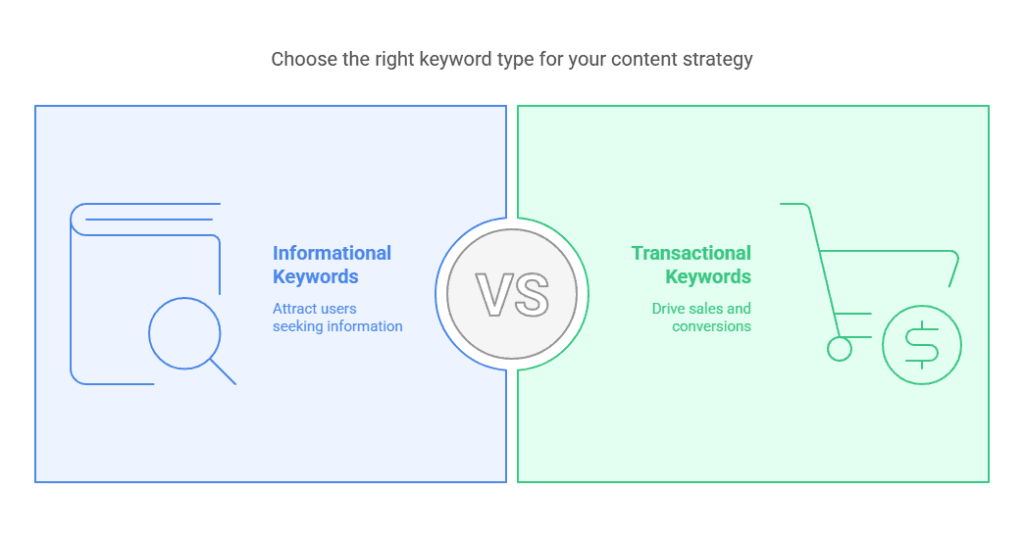
Finding Buyer Intent Keywords
Not all keywords are equal. Focus on buyer intent:
- Informational: “Best noise-cancelling headphones 2025”
- Transactional: “Buy Sony WH-1000XM4 Amazon affiliate”
Use tools like Ahrefs or SEMrush to filter by search volume and keyword difficulty (WP Manage Ninja).
Using Tools for Keyword Research
- Ahrefs Keywords Explorer for traffic estimates and difficulty scores.
- Google Keyword Planner (free) for search volume data.
- AnswerThePublic to uncover long-tail questions.
Structuring Your Content
A well-structured post enhances readability and SEO:
- Introduction: Address the searcher’s question directly.
- Body: Use clear headings, bullet points, and images.
- Conclusion: Summarize key takeaways and include a strong call to action.
Creating High-Quality SEO-Optimized Content

Unique Content and Avoiding Duplication
Google penalizes duplicate content. Aim for deep-dive reviews that include:
- Personal anecdotes.
- Hands-on testing.
- Comparison tables.
Unique insights build trust and encourage shares (Pinterest Business Community).
On-Page SEO Best Practices
- Title tags: Include the main keyword near the front.
- Meta descriptions: Write compelling summaries under 160 characters.
- Headers (H1–H3): Structure logically to guide readers.
- Keyword usage: Naturally sprinkle keywords; avoid stuffing.
- Images: Use ALT tags describing the product.
Internal and External Linking
- Internal links keep users on your site longer and pass SEO value.
- External links to authoritative sources (e.g., Amazon product pages) boost credibility.
Traffic Sources Beyond Social Media
Search Engine Optimization
Organic search drives high-intent traffic. Regularly update evergreen content, optimize for new keywords, and monitor rankings using tools like Google Search Console.
Pinterest for Evergreen Content
- Create SEO-rich pin descriptions using primary keywords.
- Use rich pins to display product info directly on Pinterest.
- Join group boards in your niche to amplify reach.
Pins function like mini-search results; followers matter less (Ucraft).
Quora for Authority Building
While direct affiliate links are discouraged, you can:
- Answer relevant questions in your niche.
- Link to detailed blog posts on your site that contain your affiliate links.
This drives both traffic and builds trust (Amazon Associates).
YouTube SEO Without Followers
- Keyword-rich video titles and descriptions.
- Timestamps for key sections (e.g., “00:45 – Unboxing”).
- Engaging thumbnails and CTAs in videos.
Videos often rank before channel subscriber count matters.
Email Marketing and Lead Magnets
- Offer a free guide or checklist in exchange for an email.
- Send regular newsletters highlighting product lists and reviews.
Email opens can convert repeatedly with each product recommendation.
Forums and Community Sites
Niche forums, Reddit, and specialized communities often allow signature links. Provide value first—answer questions deeply—then link to your detailed review posts.
Monetization Strategies
Placing Affiliate Links Naturally
Embed links within:
- Product names.
- Call-to-action buttons (“Check Price on Amazon”).
- Comparison tables.
Avoid overloading with links—prioritize user experience.
Disclosure Requirements
Legally, you must:
- Include an “Amazon Associate” disclosure near each link.
- Ensure transparency to build trust and comply with Amazon policy .
Tracking and Optimizing Commissions
Use Amazon’s tracking IDs (tag parameter) to:
- Compare performance across content types.
- Identify top-converting posts.
- A/B test link placements.
Scaling Up Without Followers
Repurposing Content
- Turn blog posts into videos or infographics.
- Combine related posts into comprehensive guides.
This maximizes content value across channels.
Automation Tools: Introduction to Affpilot AI
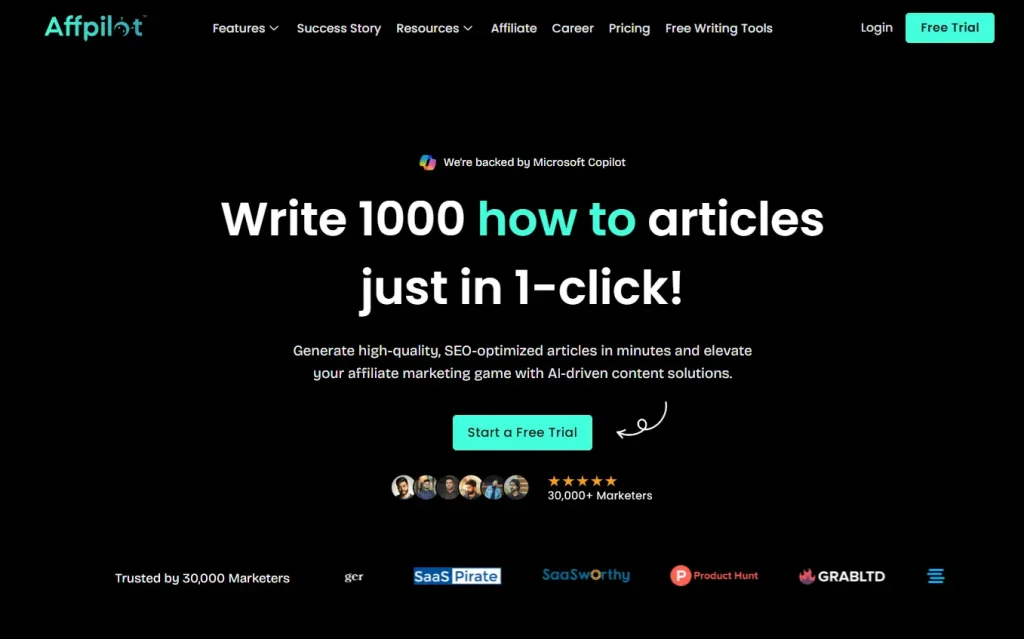
Producing hundreds of quality articles manually is time-intensive. That’s where Affpilot AI shines:
- Generate up to 1,000 Amazon review articles with your affiliate link embedded .
- Real-time product data pulls ensure specs are always current .
- Built-in SEO optimization tailors meta tags and headers for search engines .
- One-click publishing to WordPress or Blogger saves hours of manual work .
Outsourcing and Virtual Assistants
Once you automate article creation, you can delegate:
- Content review and editing.
- Image creation.
- Publishing and formatting.
This frees you to focus on strategy and growth.
Introducing Affpilot AI for Amazon Affiliate Automation
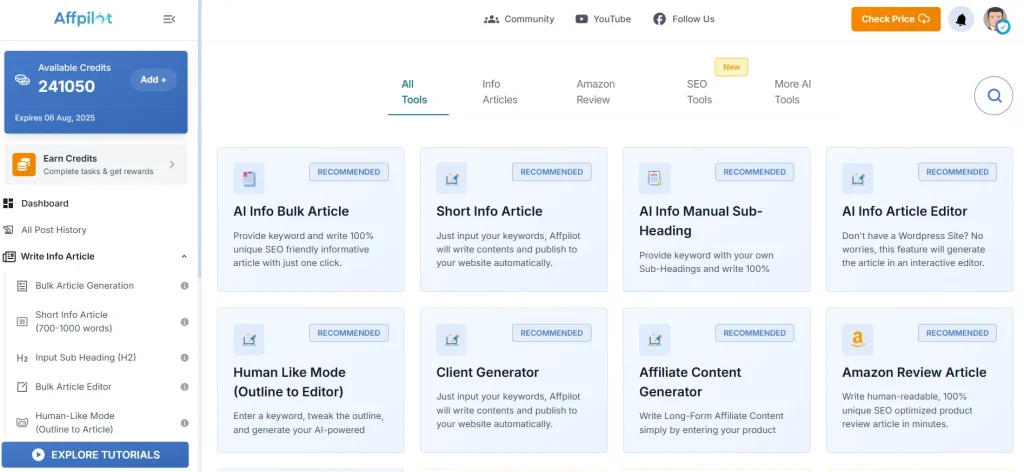
Features of Affpilot AI
- Auto Blogging at Scale
Affpilot AI can generate hundreds of articles in minutes. Simply input your keywords and ASINs, and let the AI craft in-depth product reviews tailored for SEO and conversions .
- Embedded Affiliate Links
Your Amazon Associates tag is automatically inserted into every link. No manual editing needed—ensuring accuracy and saving time .
- Real-Time Data Pulling
Affpilot AI fetches the latest product specs, images, and user reviews directly from Amazon—so your content stays fresh and relevant .
- SEO Optimization
Titles, headers, meta descriptions, and keyword distribution are automatically optimized based on best practices—boosting your chances of ranking .
- One-Click Publishing
Connect your WordPress or Blogger account and push new posts live instantly. No copy-paste, no formatting headaches.
How Affpilot AI Solves Your Challenges
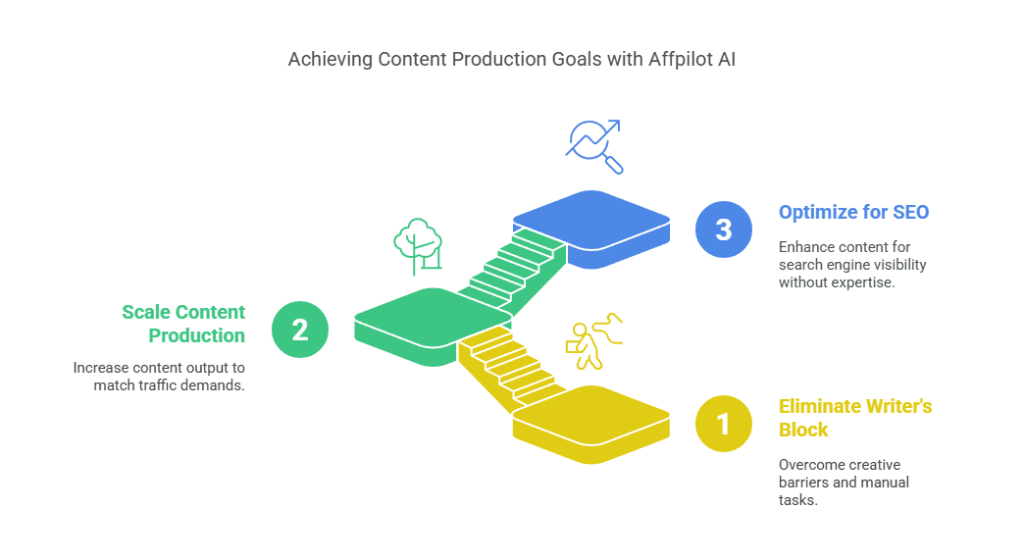
By automating research, writing, and publishing, Affpilot AI:
- Eliminates writer’s block and manual drudgery.
- Scales content production to meet any traffic goal.
- Optimizes for SEO without you becoming an expert.
Imagine waking up to dozens of fresh, SEO-ready articles that rank and convert—all without posting on social media.
Conclusion and Next Steps
Action Plan
- Sign up for Amazon Associates (no followers needed).
- Choose your niche and set up a website.
- Conduct keyword research for buyer intent.
- Create SEO-driven content and diversify traffic sources (SEO, Pinterest, Quora, YouTube, email).
- Scale with automation—explore Affpilot AI to multiply your output.
Final Thoughts
You don’t need thousands of followers to succeed as an Amazon affiliate. By leveraging SEO, alternative platforms, and automation, you can build a profitable affiliate business from scratch. What will you do today to take the first step toward affiliate success?
Our Sample Article

Benefits of Meditation: Unlocking Peace and Productivity
Shahidujzaman Shahid · May 29, 2024
How to Choose a Probiotic: Your Essential Guide
Shahidujzaman Shahid · May 29, 2024
Why Does My Cat Keep Throwing Up? Uncover the Causes!
Shahidujzaman Shahid · May 29, 2024