
Digital Marketing Plan Template: Boost Your Strategy!
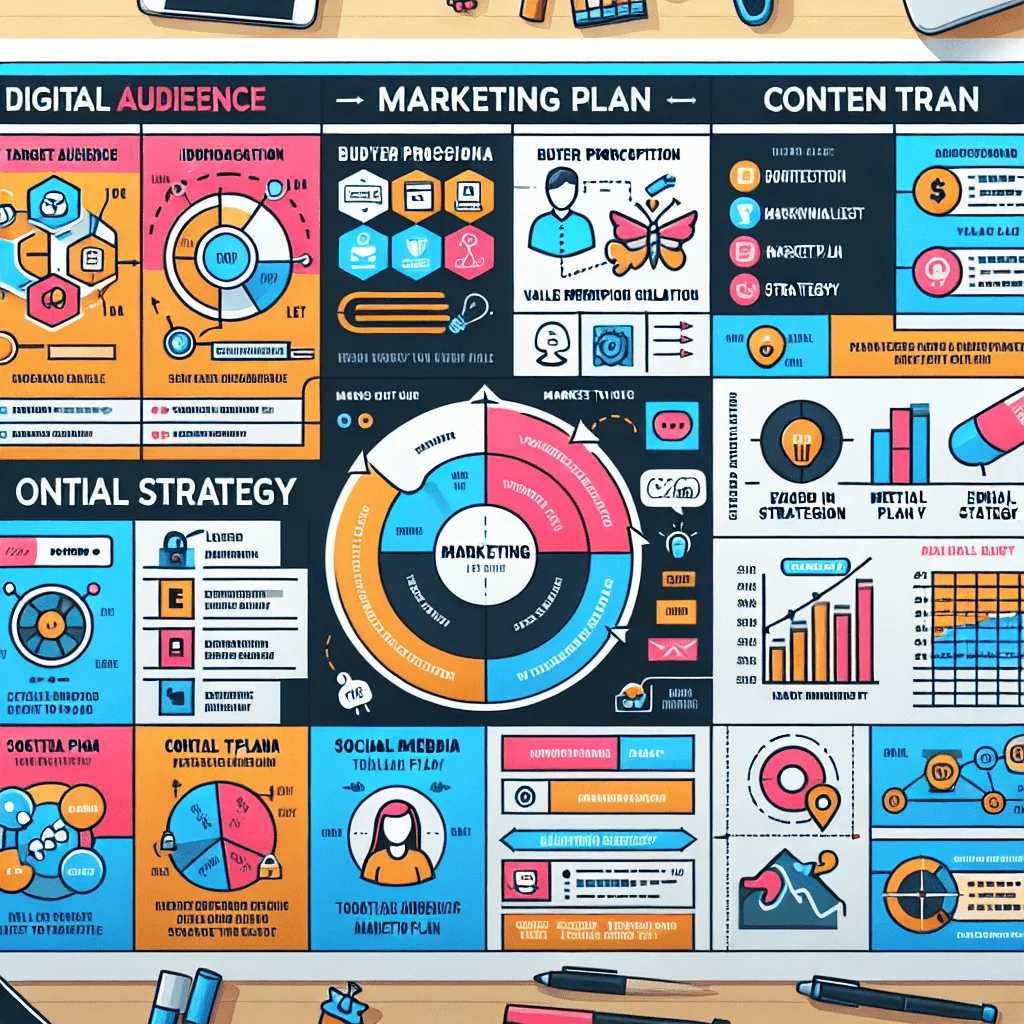
A Digital Marketing Plan Template is a strategic blueprint for online marketing efforts. It outlines goals, tactics, and measurements for success.
Crafting a digital marketing plan is essential for any business aiming to thrive in the digital era. This template serves as a guide to navigate through the multifaceted online marketing landscape. It ensures that all digital initiatives align with the company’s objectives, target audience, and budget constraints.
A well-structured digital marketing plan template can help businesses efficiently allocate resources, track progress, and adjust strategies to maximize online engagement and conversions. It simplifies the process of planning and executing digital campaigns, making it easier for marketers to achieve their desired outcomes.
Introduction To Digital Marketing Plans
An effective digital marketing plan sets the stage for business growth. It guides your online activities and aligns them with your business goals. In today’s digital age, a well-thought-out plan is not just beneficial; it’s essential.
Why A Structured Digital Marketing Plan Is Crucial
A structured plan ensures every marketing effort is goal-driven. It helps you stay focused, measure progress, and achieve results. Without a plan, marketing becomes a hit-or-miss, wasting time and resources.
- Defines clear objectives: Know what you aim to achieve.
- Allocates resources effectively: Use your budget where it counts.
- Improves decision making: Make informed choices based on data.
- Tracks progress: See what works and adjust strategies accordingly.
Key Components Of A Successful Marketing Plan
| Component | Description |
|---|---|
| Target Audience | Identify who your customers are. |
| Marketing Goals | Set specific, measurable, attainable, relevant, and time-bound goals. |
| Strategies and Tactics | Plan the actions to reach your goals. |
| Budget | Outline how much you will spend on each tactic. |
| Monitoring and Evaluation | Establish how you will track performance and refine the plan. |
Setting Clear Objectives
Every successful digital marketing plan starts with setting clear objectives. These guide your strategy and measure success. Without them, you’re navigating without a map. Let’s dive into how to set objectives that align with your business goals.
Identifying Business Goals
First, list your business goals. Think about what you want to achieve this year. More sales? A larger audience? Goals must be specific, measurable, attainable, relevant, and time-bound (SMART).
- Specific: Clear and well-defined.
- Measurable: Quantifiable to track progress.
- Attainable: Realistic and achievable.
- Relevant: Aligned with your business vision.
- Time-bound: Set deadlines for completion.
How To Align Marketing Objectives With Business Strategy
Now, align your marketing objectives with your business strategy. This ensures every effort supports the bigger picture. Use the SMART criteria here too. Create objectives that serve as stepping stones towards your broader goals.
| Business Goal | Marketing Objective | Deadline |
|---|---|---|
| Increase annual revenue | Boost online sales by 20% | Q4 2023 |
| Grow customer base | Attract 1,000 new email subscribers | Q2 2023 |
| Enhance brand awareness | Reach 500,000 social media impressions | Q3 2023 |
Ensure each marketing objective ties back to a specific business goal. Review and adjust them regularly to stay on target. Stay flexible and adapt to changes to keep your digital marketing plan effective.
Target Audience Analysis
Understanding your target audience is crucial for successful marketing. Knowing who they are helps tailor your strategies. This section explores tools and methods to analyze your audience effectively.
Tools For Audience Research
To start, use these top tools for audience research:
- Google Analytics: Reveals demographics and interests.
- Facebook Insights: Provides data on your Facebook followers.
- SurveyMonkey: Conduct surveys to gather direct feedback.
- SEMRush: Analyzes competitors and market trends.
These tools help you understand age, gender, location, and preferences.
Creating Detailed Buyer Personas
Next, create detailed buyer personas. This involves compiling data into profiles.
- Gather Data: Use the tools mentioned to collect information.
- Segment by Behavior: Look at purchasing patterns and preferences.
- Identify Needs: Understand what drives your audience’s decisions.
This process results in a clear picture of your typical customers.
For example, a buyer persona might look like this:
| Name | Urban Tech Enthusiast |
|---|---|
| Age | 30-45 |
| Interests | Technology, Smart Homes, Gadgets |
| Behavior | Shops online, reads tech blogs |
| Needs | Latest tech, convenience, efficiency |
This table shows a complete view of a persona.
By conducting target audience analysis, you create effective marketing plans. Use these insights to connect better with your audience and boost your marketing efforts.
Competitive Analysis Framework
Embarking on a digital marketing campaign without a clear understanding of the competitive landscape is like setting sail in uncharted waters. The ‘Competitive Analysis Framework’ serves as your navigational chart. It helps you identify potential rivals and understand their tactics. By doing so, you can create strategies that give you a distinct advantage in the digital arena.
Identifying Your Competitors
To begin with, pinpointing who your competitors are is crucial. Start with a simple search for your main products or services. Look at who appears in search results. Also, consider asking your customers about other companies they consider before making a purchase. A list of direct and indirect competitors will take shape from this research. With this list, you can dive deeper into your analysis.
- Use search engines to find top competitors
- Check social media for popular brands in your niche
- Ask customers for competitors they know
- Look at industry reports for market leaders
Analyzing Competitors’ Strategies
Once you know who your competitors are, it’s time to dissect their strategies. First, visit their websites and note their unique selling points. Assess their content quality, and keyword usage. Use tools to peek into their search engine optimization (SEO) tactics. Analyze their social media presence, looking at engagement rates, follower count, and content style.
| Competitor | Unique Selling Point | SEO Strengths | Social Media Presence |
|---|---|---|---|
| Company A | Fast customer service | High domain authority | Large, engaged following |
| Company B | Innovative product design | Strong backlink profile | High-quality visual content |
By understanding competitors, you can spot opportunities. Maybe your SEO can be stronger. Maybe your social media could be more engaging. Use this data to refine your digital marketing plan.
- Visit and analyze competitors’ websites
- Use SEO tools to study their online visibility
- Examine their social media tactics
- Adapt your strategy based on findings
Choosing The Right Marketing Channels
Crafting a digital marketing plan demands careful selection of marketing channels. Your choices can make or break your strategy. The right channels connect you directly to your audience. They turn prospects into loyal customers. Let’s explore how to pick the best channels for your brand.
Evaluating Online And Offline Channels
Every business is unique. So, your channel mix should reflect your goals. You need to assess both online and offline options.
- Online channels include social media, email, SEO, and PPC.
- Offline channels cover print ads, TV, radio, and direct mail.
Weigh the pros and cons. Think about your target audience. Where do they spend their time? What messages resonate with them?
| Channel | Pros | Cons |
|---|---|---|
| Social Media | Wide reach, engagement | Time-consuming |
| Personal, cost-effective | Can be ignored | |
| SEO | Long-term traffic | Slow results |
| TV | Broad audience | High cost |
Integrating Multi-channel Strategies
The best plans use multiple channels. This approach is called a multi-channel strategy. It ensures your message is everywhere your audience is.
- Start with data. Look at where your audience interacts with your brand.
- Choose channels that work together. They should tell a cohesive story.
- Create a content calendar. It helps to maintain a consistent presence.
Remember, your online and offline efforts should support each other. For example, your social media can promote an in-store event.
Content Strategy Development
Creating a powerful digital marketing plan calls for a solid content strategy. This strategy is the backbone of your online presence. It draws in your audience. It turns visitors into loyal customers. Let’s dive into the process of choosing the right content types and planning your content calendar.
Planning Content Types and Formats
Planning Content Types And Formats
Understanding your audience is key. It guides the content you create. Aim for variety to engage your audience. Combine text, images, and videos for impact. Below, find a range of content types to consider.
- Blog Posts: Great for storytelling and SEO.
- Videos: Ideal for tutorials and product showcases.
- Infographics: Perfect for data display and quick info.
- Podcasts: Engage listeners with discussions and interviews.
- Webinars: Educate and interact with your audience live.
- E-books: Provide in-depth knowledge on a topic.
- Email Newsletters: Keep subscribers updated and engaged.
- Social Media Posts: Connect and share quick updates.
Match content types to your goals. Use a mix that resonates with your audience.
Content Calendar and Scheduling
Content Calendar And Scheduling
Planning is crucial for consistency. A content calendar is your best tool. It helps you stay organized. You’ll know what to publish and when. Below is a simplified calendar structure you can adapt.
| Date | Content Type | Topic | Status |
|---|---|---|---|
| Monday, April 3 | Blog Post | 10 SEO Tips for 2023 | Published |
| Wednesday, April 5 | Video | How to Use Google Analytics | Scheduled |
| Friday, April 7 | Infographic | Digital Marketing Statistics | In Progress |
Use scheduling tools to automate posting. This frees up time for other tasks. Ensure your content goes live at the best times for engagement.
Budgeting For Digital Marketing
Creating a comprehensive digital marketing plan is crucial for any business aiming to succeed online. An essential component of this plan involves budgeting for digital marketing. It’s not just about how much money to spend, but how to distribute the funds for maximum impact.
Allocating Funds Across Channels
With numerous platforms available, deciding where to invest can be overwhelming. A well-thought-out budget considers the unique strengths of each channel and aligns them with the business goals. Here are key considerations:
- Identify the target audience: Understand where potential customers spend their time.
- Set clear objectives: Define what each channel aims to achieve.
- Analyze past performance: Use data to make informed decisions.
Use a table to visualize the allocation:
| Channel | Objective | % of Budget |
|---|---|---|
| SEO | Organic Traffic | 25% |
| PPC | Lead Generation | 35% |
| Social Media | Brand Awareness | 20% |
| Email Marketing | Customer Retention | 20% |
Roi Expectations And Cost Management
Understanding ROI (Return on Investment) is vital for effective budgeting. It helps businesses measure success and make necessary adjustments. Key steps include:
- Set realistic ROI goals for each digital channel.
- Track and analyze performance data regularly.
- Adjust spending based on data-driven insights.
Cost management is another critical aspect. It ensures that spending aligns with business priorities. Tips for managing costs:
- Use budgeting tools for tracking and forecasting.
- Focus on high-performing channels to optimize spend.
- Be ready to reallocate funds quickly if a channel underperforms.
Regularly revisiting the budget is essential to stay on top of digital marketing expenditures. It ensures that every dollar spent contributes to the overall business objectives.
Monitoring And Measuring Success
A Digital Marketing Plan isn’t set in stone. It evolves as you track your campaign’s success. Knowing if your efforts are paying off is crucial. You do this by monitoring and measuring how well your strategies perform. Let’s dive into the details of how you can track your digital marketing success effectively.
Key Performance Indicators (kpis)
Key Performance Indicators are your success metrics. They help you understand your progress towards your goals. Here are some KPIs you should track:
- Website Traffic: Number of visitors to your site.
- Conversion Rate: Percentage of visitors who take desired action.
- Bounce Rate: Visitors leaving without interaction.
- Cost Per Acquisition: Cost to acquire a new customer.
- ROI: Return on investment from your marketing activities.
Tools And Techniques For Tracking Performance
To measure your KPIs, you need the right tools. Here are some you can use:
| Tool | Use |
|---|---|
| Google Analytics | Tracks website traffic and user behavior. |
| SEMrush | Monitors SEO and paid search performance. |
| HubSpot | Manages inbound marketing and sales data. |
| Hootsuite | Keeps tabs on social media engagement. |
Combine these tools with regular performance reviews. Adjust your plan as needed to keep your marketing on track. Remember, success is not just about numbers, but understanding those numbers to make better decisions.
Optimization And Continuous Improvement
The journey of digital marketing does not end with the launch of a campaign. To stay ahead in the game, constant optimization and continuous improvement are vital. These steps ensure the digital marketing plan remains effective and efficient over time. Let’s dive into how analyzing data can provide valuable insights and the importance of an iterative process in strategy enhancement.
Analyzing Data For Insights
Every click, view, and interaction online generates data. This data is a goldmine of insights. To unlock its potential, one must delve deep into the analytics. Tools like Google Analytics offer a comprehensive look at campaign performance. Key metrics to track include:
- Website Traffic: Total visitors and the sources they come from.
- Bounce Rate: The percentage of visitors who navigate away after viewing only one page.
- Conversion Rate: The ratio of visitors who take a desired action.
By examining these metrics, marketers can identify what works and what doesn’t. This process leads to data-driven decisions that can enhance campaign outcomes.
Iterative Process For Strategy Enhancement
Digital marketing is an ever-evolving field. An iterative process allows for regular updates to the strategy. This process includes:
- Assess: Review current performance against goals.
- Plan: Make adjustments based on data insights.
- Execute: Implement changes swiftly and efficiently.
- Measure: Analyze the impact of the changes made.
By continuously cycling through these steps, a digital marketing plan stays fresh and relevant. It adapts to changing trends, audience behaviors, and technological advancements. This ensures long-term success and a competitive edge.
Conclusion: Implementing The Plan
The final step in your digital marketing journey involves implementing the plan. This phase turns your strategies into real-world actions. It demands focus and adaptation to ensure success.
Steps To Take Action
Activating your digital marketing plan requires clear steps:
- Assign tasks to team members based on their strengths.
- Set deadlines for each marketing activity.
- Use project management tools to track progress.
- Launch campaigns and monitor their initial performance.
Review And Feedback Mechanisms
Continuous improvement is key to digital marketing success. Establish mechanisms to gather insights:
- Weekly check-ins allow teams to share updates and adjustments.
- Customer feedback should be collected and analyzed regularly.
- Implement analytics tools to measure campaign effectiveness.
- Adjust strategies based on data-driven insights.
Conclusion
Crafting a digital marketing plan is now within your reach. With the right template, you can navigate the online landscape effectively. Remember, consistency and adaptation are key to success. Start shaping your strategy today, and watch your business grow. Let’s embrace the digital revolution together.
Our Sample Article

Benefits of Meditation: Unlocking Peace and Productivity
Shahidujzaman Shahid · May 29, 2024
How to Choose a Probiotic: Your Essential Guide
Shahidujzaman Shahid · May 29, 2024
Why Does My Cat Keep Throwing Up? Uncover the Causes!
Shahidujzaman Shahid · May 29, 2024