
How Long Should Blog Posts Be for SEO: Optimal Length Revealed
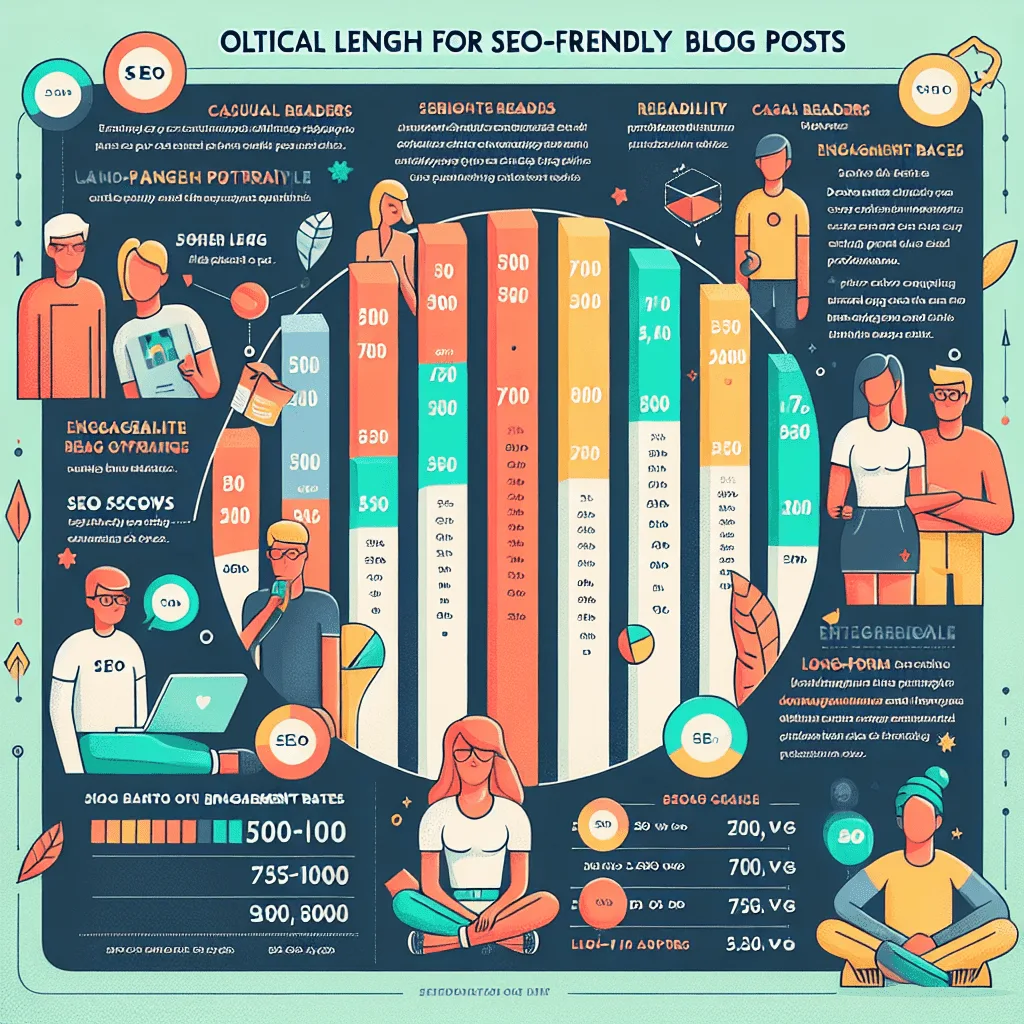
The ideal length for SEO-friendly blog posts is typically between 1,000 to 2,500 words. This range balances thorough coverage of a topic with user engagement.
Crafting a compelling blog post that performs well in search engine rankings is both an art and a science. It involves striking the right balance between providing valuable, in-depth content and maintaining the reader’s attention. Search engines favor comprehensive content that offers genuine value to readers, often reflected in longer posts that explore subjects thoroughly.
Yet, the key is not just word count but the relevance and quality of the information presented. Content creators should aim to answer readers’ questions, incorporate relevant keywords naturally, and ensure the post is well-structured with headings, subheadings, and lists to enhance readability. By doing so, they meet user intent and search engine criteria, paving the way for better SEO performance.
The Quest For Optimal Blog Length
The quest for the perfect blog post length is ongoing. Many writers wonder, “How long should my blog post be for the best SEO results?” Let’s dive into this intriguing topic.
Factors Influencing Ideal Blog Post Size
The ideal length of a blog post depends on several factors:
- Audience Engagement: Longer posts can detail topics more thoroughly, possibly increasing engagement.
- Purpose: Are you solving a problem or providing quick tips? Length can vary based on the goal.
- Competition: Sometimes, checking how long competitor posts are can provide insights.
- Keywords: Long posts often rank better for multiple keywords.
Understanding these factors helps tailor blog length to your specific needs.
The Seo Myth Of One-size-fits-all
Many believe there is a magic number for blog post length in SEO. This is a myth.
SEO success comes from quality, relevance, and user satisfaction, not just post length.
Here’s why a one-size-fits-all approach does not work:
- Varied User Intent: Each search query has different user expectations.
- Content Type: Tutorials naturally need more words than a simple answer.
- Industry Differences: Technical topics often require longer explanations.
Focus on creating content that provides value and answers to your audience.
Decoding Google’s Algorithm
Understanding how Google’s algorithm works can be tricky. It uses many rules to rank websites. One key rule focuses on the length of blog posts. Let’s dive into how content length can affect your SEO success.
Ranking Factors Related To Content Length
Google’s algorithm values several factors when assessing blog posts. Here’s a simplified breakdown:
- Engagement: Longer posts often encourage more reader interaction.
- Keywords: More text provides more opportunities for keyword use.
- Authority: Detailed articles can establish a site as an expert source.
How Content Depth Outweighs Word Count
It’s not just about hitting a word count. Content depth is crucial. Depth means covering a topic fully, which helps readers and boosts SEO.
Consider these points:
- Quality beats quantity. A well-written, informative 700-word post can outperform a shallow 2,000-word one.
- Focusing on user needs leads to better engagement and sharing.
Remember, a well-rounded post with relevant details matters more than just length.
Analyzing Industry Benchmarks
When diving into the world of SEO, we often ponder over the ideal length of a blog post. Industry benchmarks guide us through this maze. Let’s examine what industry standards suggest for the optimal blog post size to boost SEO.
Insights From Seo Thought Leaders
Expert opinions shape our understanding of SEO-friendly content. Leading SEO specialists recommend varying lengths. The consensus indicates quality over quantity. Yet, certain lengths often correlate with better rankings.
- Neil Patel suggests long-form content creates more backlinks.
- Rand Fishkin believes in comprehensive posts that answer user questions fully.
- Yoast SEO recommends a minimum of 300 words for blog posts.
Statistical Trends In Blog Lengths
Statistical analysis reveals the average blog post length. Studies show longer posts tend to rank higher on search engines.
| Year | Average Post Length (words) |
|---|---|
| 2014 | 900 |
| 2016 | 1,050 |
| 2018 | 1,150 |
| 2020 | 1,200 |
| 2022 | 1,300 |
Recent data suggests the ideal post length is around 1,000 to 2,000 words. This range balances detail with reader engagement.
The Role Of Engagement Metrics
Understanding the role of engagement metrics is vital in determining the ideal length for a blog post. These metrics give insights into how users interact with content. They help in evaluating a post’s effectiveness and its SEO performance.
Time On Page
The metric ’Time on Page’ is an indicator of reader interest and content value. A longer time spent on a page suggests that readers find the content engaging and informative. This can signal to search engines that the content is relevant, potentially boosting SEO rankings.
- Higher time on page often correlates with in-depth, valuable content.
- Engaging multimedia and interactive elements can increase time spent on the site.
- Well-structured content with subheadings and bullet points encourages longer visits.
Bounce Rates
Bounce rates reflect the percentage of visitors who leave after viewing only one page. A high bounce rate might indicate that the content does not meet the needs or expectations of the visitor. Lower bounce rates can be a positive sign of content relevance and user engagement, influencing SEO favorably.
- Aim for a bounce rate lower than the industry average.
- Ensure the first paragraph captures reader interest.
- Include clear calls-to-action to guide readers to related content.
Social Shares And Comments Impact
Social interactions, such as shares and comments, are direct indicators of content engagement. High levels of social activity can enhance content visibility and establish credibility. This social proof can indirectly contribute to SEO by driving more traffic and generating backlinks.
| Social Metric | SEO Benefit |
|---|---|
| Shares | Increases reach and potential backlinks |
| Comments | Signals active engagement and content updates |
Encourage social sharing and comments by:
- Asking questions to prompt discussion.
- Including share buttons in visible locations.
- Responding to comments to foster a community.
Long-form Content: Pros And Cons
Understanding the ideal length for blog posts in SEO can be tricky. Long-form content often surfaces in this conversation. Let’s explore its benefits and limitations.
Advantages Of In-depth Articles
Long-form content often ranks better in search engines. Here’s why:
- Thorough Coverage: In-depth pieces cover topics extensively, providing more value to readers.
- Keyword Opportunities: Longer posts have more room for relevant keywords and phrases.
- Increased Engagement: Engaging, detailed articles encourage visitors to spend more time on your site.
- Backlink Potential: Quality content attracts backlinks, boosting your site’s authority.
- Sharing is Caring: Readers share valuable content, increasing your reach.
Potential Drawbacks Of Longer Posts
Despite their benefits, long-form articles come with challenges:
| Drawback | Explanation |
|---|---|
| Time-Consuming: | Writing detailed posts takes more time and resources. |
| Reader Fatigue: | Long texts can overwhelm readers, leading to higher bounce rates. |
| Complexity: | Deep dives can become complex, potentially confusing the audience. |
| Updating: | Long posts require more effort to keep updated with fresh information. |
Short-form Content: When Less Is More
In the bustling world of SEO, short-form content often shines. Quick reads match today’s fast-paced digital consumption habits. Let’s dive into why brevity can be a powerful ally in your content strategy.
The Power Of Brevity
Concise content delivers information swiftly. Readers appreciate snappy posts when searching for specific answers. Short posts can rank well if they answer queries effectively. They’re easy to digest, making them ideal for mobile users who scroll on-the-go.
Here’s how short-form content benefits your site:
- Quick to produce: Less time writing means more content.
- High engagement: Readers stay for the whole post.
- Shareable: Easy to pass along to others, boosting visibility.
Scenarios Where Short Posts Win
Different topics and audiences require distinct content lengths. Short-form content excels in particular scenarios.
| Scenario | Why Short-Form Fits |
|---|---|
| Quick Answers | Users find immediate solutions. |
| News Updates | Delivers fresh information fast. |
| Social Media Teasers | Engages and directs to longer content. |
Consider these points when crafting short-form content:
- Identify the core message and stick to it.
- Use bullet points and subheadings for clarity.
- Ensure every sentence adds value to the reader.
Remember, short-form content can lead to high conversion rates. It is perfect for calls-to-action that need immediate attention.
Balancing Quality And Quantity
When crafting blog posts for SEO, striking a balance between quality and quantity is crucial. A well-written, engaging article that’s too short may not cover a topic in depth. On the other hand, a long but poorly written post can deter readers. The key is to provide valuable content in a digestible length to satisfy both search engines and readers.
Maintaining Reader Interest
Keeping readers hooked from start to finish is a top priority. This means creating content that is:
- Informative and relevant to your audience’s interests
- Structured with headings and subheadings for easy navigation
- Enriched with multimedia, like images and videos, to break up text
Using short paragraphs and simple language also ensures that the message is clear. The goal is to deliver value quickly and effectively, without overwhelming readers with too much information at once.
Strategic Content Planning
Creating a roadmap for blog content leads to better posts. Here’s how to plan strategically:
| Step | Action | Outcome |
|---|---|---|
| 1 | Identify target keywords | Align posts with search queries |
| 2 | Research the competition | Understand content gaps to fill |
| 3 | Decide on post length | Balanced articles that rank well |
This approach ensures that each post is not only SEO-friendly but also meets the needs of the reader. A combination of keyword-rich content, competitive analysis, and data-driven decisions about length leads to optimal blog posts.
Tools And Techniques For Seo Success
Understanding the right tools and techniques is vital for SEO success. Mastering these can significantly impact your blog’s reach and ranking. Let’s explore some key resources that can help you create SEO-friendly content that both search engines and readers will love.
Content Analysis And Optimization Software
Content analysis and optimization software ensure your posts meet SEO standards. These tools provide insights into how well your content is likely to perform in search engines. They can also offer suggestions to improve readability and keyword usage.
- Yoast SEO: Offers real-time page analysis to help you optimize your content, images, meta descriptions, and more.
- SEMrush Writing Assistant: Provides SEO recommendations based on your target keywords.
- Grammarly: Checks for grammatical errors and improves the quality of your writing.
Keyword Research And Implementation
Keyword research is the cornerstone of SEO. Identifying the right keywords can lead to better rankings and more traffic. Once you have your keywords, it’s important to implement them strategically in your content.
| Tool | Function |
|---|---|
| Google Keyword Planner: | Finds keywords and provides search volume data. |
| Ahrefs: | Offers keyword suggestions and competitive analysis. |
| Moz Keyword Explorer: | Gives keyword suggestions and SERP analysis. |
Use keywords in titles, headings, and throughout your content. Make sure to balance keyword density with natural, engaging writing. Strong, relevant keywords in the right places can make a huge difference.
The Future Of Seo And Content Length
The landscape of SEO is ever-evolving, and with it, the optimal length for blog posts. Content creators often wonder, what is the magic number that pleases both readers and search engines? As we look to the future, the answer to this question becomes more complex, influenced by sophisticated algorithms and emerging technologies.
Predictive Analytics And Ai Influence
In the realm of SEO, predictive analytics and AI are game changers. These technologies forecast user behavior and preferences, tailoring content to match. This means content length may soon depend on data-driven insights, ensuring every post is just the right length to engage the target audience.
- Analytics tools will suggest optimal post lengths.
- AI will personalize content for different readers.
- Search patterns and trends will dictate adjustments in real-time.
Adapting To Changing Search Engine Algorithms
Search engines constantly refine their algorithms to improve user experience. As these changes occur, the importance of content length may shift. Staying ahead means adapting quickly to these updates. Here’s how:
| SEO Component | Action for Adaptation |
|---|---|
| Algorithm Updates | Regularly review SEO guidelines. |
| User Engagement Metrics | Analyze and improve user interaction. |
| Content Quality | Ensure depth and value in posts. |
SEO professionals must stay informed and ready to optimize content at a moment’s notice. This may mean shorter, more concise posts at times, or longer, in-depth articles at others.
Conclusion
Determining the ideal length for your blog posts hinges on your audience and objectives. Striking a balance between thorough content and reader engagement is key. Aim for posts that deliver value, optimize for keywords, and keep your readers wanting more.
Remember, quality trumps quantity every time. Keep refining and your SEO will thrive.
Our Sample Article

Benefits of Meditation: Unlocking Peace and Productivity
Shahidujzaman Shahid · May 29, 2024
How to Choose a Probiotic: Your Essential Guide
Shahidujzaman Shahid · May 29, 2024
Why Does My Cat Keep Throwing Up? Uncover the Causes!
Shahidujzaman Shahid · May 29, 2024