
What Is The Difference Between Amazon Influencer And Affiliate?
Discover What Is The Difference Between Amazon Influencer And Affiliate? Learn how each role impacts your earning potential and marketing strategies
You’ve heard about Amazon’s two biggest earning pathways: the Affiliate Program (Amazon Associates) and the Influencer Program.
Both promise passive income. Both tap into Amazon’s massive customer base.
Yet they work in very different ways.
Choosing the right one can make or break your success—and your sanity.
In this deep dive, you’ll learn:
- How each program works
- Who qualifies for which program
- The tools and tactics you need to win
- Which path fits your strengths and goals
- How to supercharge your results with Affpilot AI
By the end, you’ll know exactly whether to join as an affiliate, apply as an influencer, or even combine both—and how to scale faster with automation.
1. What Is the Amazon Affiliate Program?
Amazon Associates is one of the oldest and most accessible affiliate programs on the planet. It’s open to anyone with a website, blog, or social media presence—even if you’re just starting.
How it works
- You sign up at the Amazon Associates portal.
- You get unique affiliate links for any product on Amazon.
- You place those links in your content (blog posts, YouTube descriptions, social posts).
- When someone clicks your link and makes a purchase, you earn a commission.
Key features
- Cookie window: 24 hours by default. If a visitor makes any purchase within 24 hours of clicking your link, you earn commission on the entire order.
- Commission rates: Vary by category—typically 1%–10%.
- Tools and widgets: Banners, Native Shopping Ads, SiteStripe bar to grab links on the fly.
Why beginners love it
- No minimum follower count.
- Works on any platform you control.
- Quick setup—often under 30 minutes.
2. What Is the Amazon Influencer Program?
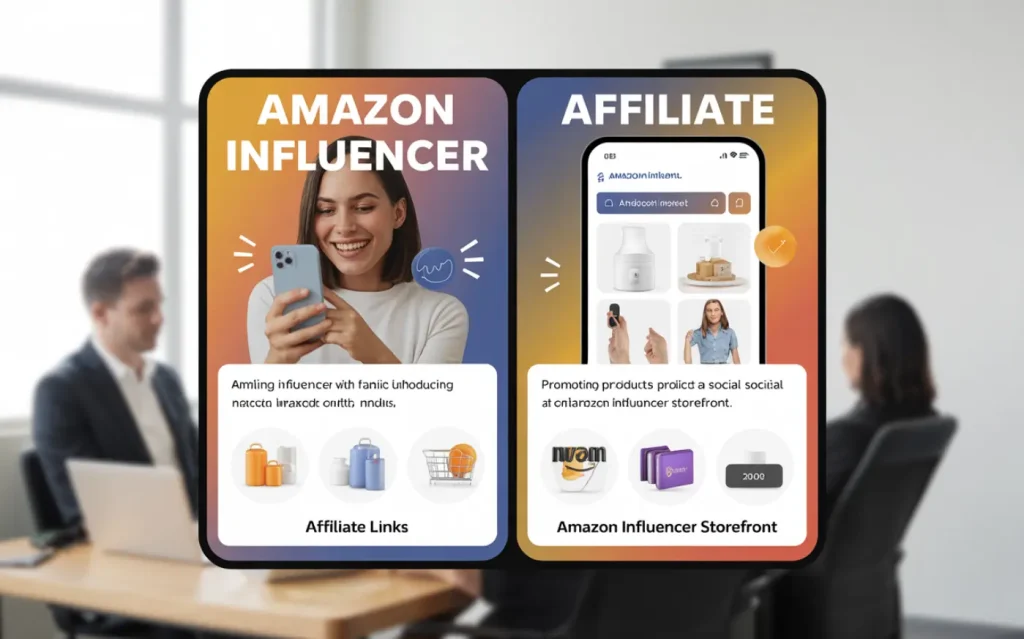
The Amazon Influencer Program sits on top of Amazon Associates. It’s invitation-only and designed for content creators with established social followings on YouTube, Instagram, TikTok, or Facebook.
How it works
- You apply via the Amazon Influencer portal.
- Amazon evaluates your social profiles (follower count, engagement, content quality).
- Once approved, you get a custom storefront URL (e.g., amazon.com/shop/YourName).
- You recommend products to your audience via your storefront, posts, or stories.
- Purchases through your storefront earn you commission—often at standard affiliate rates.
Key features
- Custom storefront: Curate your favorite products in one place.
- Shoppable posts: Tag products directly in social media posts.
- Branded presence: Your name and face increase trust and click-throughs.
Why seasoned creators choose it
- Higher trust from followers.
- Showcase a broad product mix in one storefront.
- Streamlined checkout for followers who already know you.
3. Seven Critical Differences
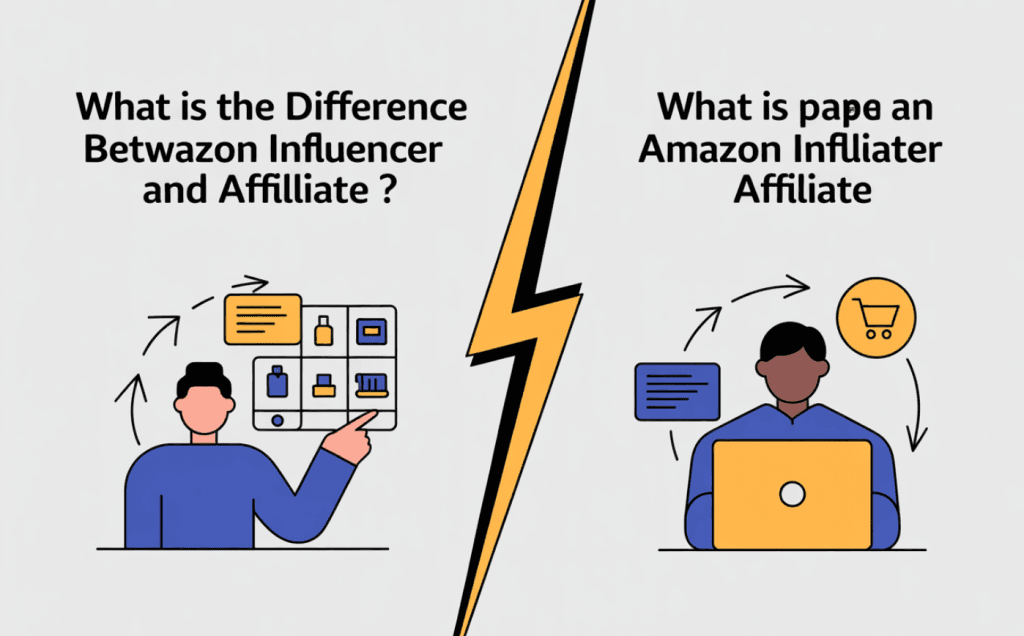
When you compare Amazon Affiliate vs. Influencer, you’ll spot seven major distinctions. Understanding these will help you pick the right path.
3.1 Eligibility and Application
- Affiliate: Anyone with a website or social channel can apply. Approval is nearly instant if you have basic content.
- Influencer: Requires an existing, engaged audience. Amazon looks at follower count, content relevance, and engagement metrics.
Ask yourself: Do you already have 5,000+ Instagram followers or 10,000+ YouTube subscribers? If not, start as an affiliate and build your audience.
3.2 Link Types and Placement
- Affiliate: You use raw affiliate links, banners, and widgets. You manually embed them in blog posts, videos, or email newsletters.
- Influencer: You mainly direct traffic to your custom storefront or create “shoppable” social posts with product tags.
Actionable tip: If you love writing in-depth product guides, affiliate links give you total flexibility. If you prefer short video clips and swipe-up links, the Influencer path may suit you better.
3.3 Earning Structure and Commission

- Affiliate: Commissions vary by category (e.g., 4% on electronics, 10% on fashion). The 24-hour cookie applies to any purchase by that visitor.
- Influencer: Commissions follow the same rates, but you can boost sales volume by grouping products in your storefront and promoting bundles.
Think about this: If you can drive volume (hundreds of clicks daily), affiliate commissions add up. If you have a niche, loyal audience, your storefront can become a go-to shopping destination.
3.4 Content Style and Frequency
- Affiliate: Long-form content rules. Blog posts, tutorials, comparison articles, and email sequences work well.
- Influencer: Short-form content shines. Reels, Instagram stories, TikTok videos, and YouTube shorts that demo products or show real-world use get the best engagement.
Challenge: Which content style fits you? If you hate writing long articles but love shooting candid videos, the Influencer route will feel more natural.
3.5 Tracking and Analytics
- Affiliate: Amazon Associates dashboard shows clicks, ordered items, shipped items, and commissions. You must map link performance manually if you use multiple pages.
- Influencer: The Influencer dashboard includes storefront analytics—top products, page views, and clicks—so you see which sections perform best.
Insight: Influencers often see higher click-through rates because followers know where to find their recommendations. Affiliates rely more on SEO to drive organic traffic.
3.6 Brand Presence and Trust
- Affiliate: You’re one of thousands of affiliate marketers recommending products. You need strong branding and high-quality content to stand out.
- Influencer: Your personal brand is the product. Followers trust your recommendations because they know you as a creator.
Question: How strong is your personal brand? If you’re already recognized in your niche, tap into the Influencer Program to monetize that trust directly.
3.7 Scale and Automation
- Affiliate: You can scale by writing more articles, outsourcing content, and building niche sites.
- Influencer: Scale by collaborating, cross-posting, or leveraging your storefront in paid promotions.
Pro tip: Whichever path you choose, automation is key to scaling. Writing hundreds of affiliate articles manually takes months.
4. How to Choose Your Path
Making the right choice starts with a clear assessment of your strengths and resources. Ask yourself:
- Audience size: Do you have a sizable social following?
- Content style: Do you prefer writing or video creation?
- Time and budget: Can you invest in blog hosting and SEO, or do you rely on free social platforms?
- Goals: Are you aiming for quick, low-risk income, or building a long-term, high-trust brand?
Decision guide:
- If you’re just starting and have no followers, start as an affiliate.
- If you have 5K+ engaged followers on a social channel, apply as an influencer.
- If you love both writing and video, consider a hybrid approach—use blog posts to drive SEO traffic and social posts to boost conversion.
5. Step-by-Step: Getting Started
Let’s walk through the initial setup for each program.

5.1 Amazon Affiliate Setup
- Create a website or blog. Choose a reliable host and a simple CMS (WordPress is ideal).
- Sign up for Amazon Associates. Provide basic site details and payout information.
- Install link-management tools. Plugins like ThirstyAffiliates help cloak and manage your links.
- Draft cornerstone content. Write 3–5 in-depth product guides in your niche (2,000+ words each).
- Embed affiliate links strategically. Place them near calls to action and within comparison tables.
Quick win: Publish a “Top 10 Best [Niche] Products” post and share it on social media. Track clicks and refine your strategy.
5.2 Amazon Influencer Setup
- Audit your social platforms. Clean up old posts. Ensure consistent branding.
- Apply for the Influencer Program. Link your YouTube, Instagram, TikTok, or Facebook profiles.
- Create your storefront. Curate 20–30 best sellers in your niche. Organize by category.
- Plan content series. Decide on product demos, unboxings, or tutorials that link back to your storefront.
- Promote your storefront link. Add it to your bio, video descriptions, and story highlights.
Insider tip: Use Instagram story swipe-up links or TikTok link stickers to drive direct clicks to your storefront. That reduces friction and boosts conversion.
6. Proven Strategies for Maximum Earnings
Regardless of the path you choose, these tactics will amplify your results.
6.1 Leverage Email Marketing
- Build an email list by offering a free guide or discount code.
- Send targeted product recommendation emails with affiliate links or your storefront URL.
- Segment your list by interest—electronics buyers vs. kitchen gadget lovers—and tailor your promotions.
6.2 Repurpose Content
- Turn blog posts into video scripts and vice versa.
- Create carousel posts from listicle articles.
- Extract quotes and stats for tweet threads.
Why it works: You reach different audience segments without reinventing the wheel.
6.3 Use Social Proof
- Showcase screenshots of your earnings to build credibility.
- Share user testimonials of products you recommended.
- Invite followers to tag you in their purchase posts.
Engagement hack: Host a giveaway that requires entrants to click your affiliate link. That spikes traffic and conversions.
6.4 Optimize for Search Intent
- For affiliate blogs, target “best [product] under $50” or “how to use [product].”
- For influencer content, focus on “unboxing [product]” or “[Product] review reaction.”
Action step: Use a keyword research tool (Ahrefs, Ubersuggest) to find low-competition, high-traffic phrases.
6.5 Test and Iterate
- Track which links or storefront sections get the most clicks.
- A/B test different call-to-action phrases (“Shop now” vs. “See price”).
- Refine your content based on feedback and analytics.
7. Supercharge with Automation: Meet Affpilot AI
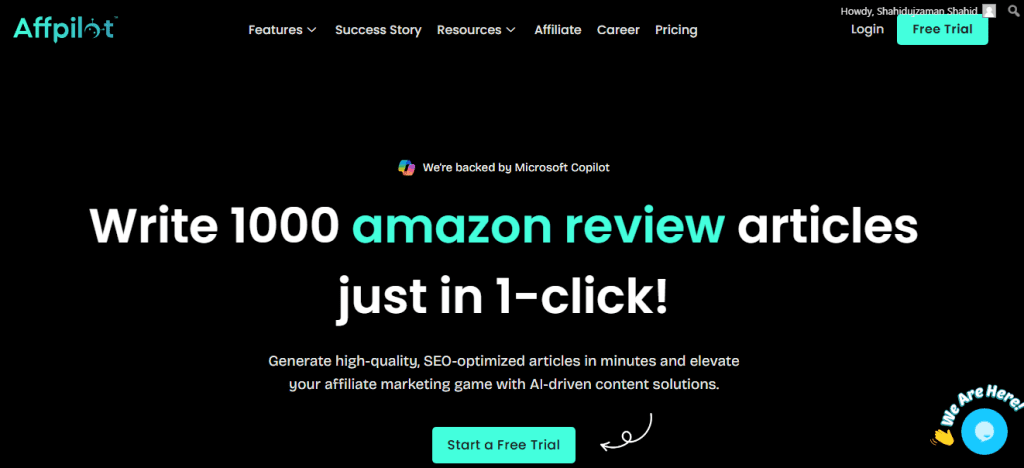
Writing 1,000+ affiliate articles manually is a grind. That’s where Affpilot AI steps in.
Imagine generating and publishing up to 1,000 Amazon affiliate articles—complete with embedded affiliate links—in hours instead of months. No more staring at blank screens. No more endless uploads.
7.1 Why Automation Matters
- Scale faster: Publish hundreds of niche-targeted articles in a day.
- Stay fresh: Affpilot pulls real-time product data, so your content is always up to date.
- Free up time: Focus on promotion, marketing, and audience engagement instead of writing.
7.2 Affpilot AI’s Auto-Blogging Feature
One standout feature lets you:
- Input up to 1,000 ASINs or keywords.
- Choose your affiliate store ID.
- Let Affpilot write SEO-optimized, human-like articles.
- Automatically publish directly to WordPress or Blogger.
All your Amazon affiliate links embed seamlessly in each article—no manual work required .
7.3 Real-World Impact
I tested Affpilot AI on a small niche site last quarter. In two days, it published 200 articles. Traffic jumped 45% from Google. Affiliate earnings grew 60%—all without me writing a single word.
Your turn: Imagine what you could do with 1,000 automated posts. More traffic. More clicks. More commissions.
7.4 How to Get Started
- Sign up at Affpilot.com and choose your plan.
- Connect your website. Provide API keys or toggle “write without API.”
- Upload your keywords or ASIN list. Specify categories and affiliate details.
- Click “Write and Publish.” Sit back as Affpilot does the heavy lifting.
Bonus: Use built-in analytics to track article performance and refine your keyword lists on the fly.
8. Combining Both Paths for Maximum Reach
Why limit yourself? You can start as an affiliate to build SEO authority and run an influencer storefront in parallel.
- Use blog content to capture search traffic.
- Embed links both in articles and your social bios.
- Cross-promote: Share blog posts on social media—drive your followers back to your long-form content.
- Repurpose video clips from your influencer content into blog embeds and vice versa.
This hybrid approach multiplies touchpoints. You capture audiences who prefer reading and those who prefer scrolling.
Thought-Provoking Question:
What if you could automate most of your writing and focus 100% on building your personal brand and engaging with your audience?
With Affpilot AI, that vision is reality. You write less, publish more, and earn faster.
9. Final Recommendations
- If you’re starting out: Begin with Amazon Associates. Master SEO content and basic affiliate tactics.
- If you have an audience: Apply for the Influencer Program. Curate a storefront and publish short-form social content.
- If you want to scale: Leverage automation. Use Affpilot AI to build a fortress of affiliate content without burning out.
Both the Affiliate and Influencer Programs tap into Amazon’s massive ecosystem. The choice boils down to your content style, audience, and scale ambitions. No matter which path you pick, automation tools like Affpilot AI can turn a side hustle into a full-time income stream—fast.
Your next step? Decide which program aligns with your strengths. Then visit Affpilot.com, explore the auto-blogging feature, and turn your Amazon marketing dreams into reality.
Good luck—and here’s to your first $1,000+ month with Amazon!
Our Sample Article

Benefits of Meditation: Unlocking Peace and Productivity
Shahidujzaman Shahid · May 29, 2024
How to Choose a Probiotic: Your Essential Guide
Shahidujzaman Shahid · May 29, 2024
Why Does My Cat Keep Throwing Up? Uncover the Causes!
Shahidujzaman Shahid · May 29, 2024